


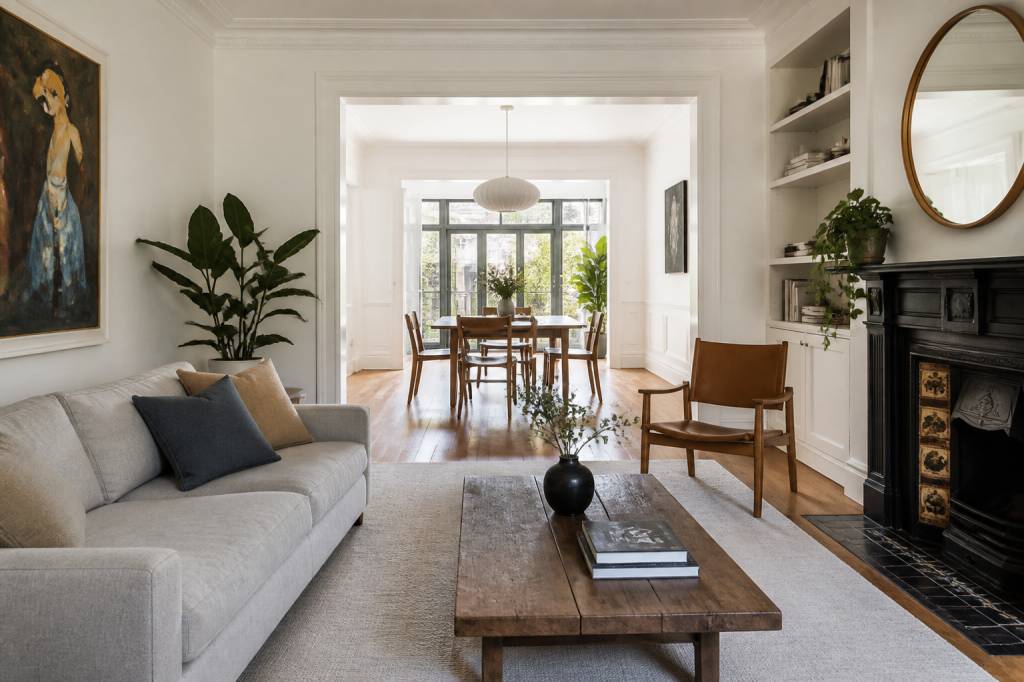
There is something deeply comforting about a 1930s house. Perhaps it is the generous hallway, the gentle curve of a bay window, or the way afternoon light settles across original floorboards. These homes were built with a quiet confidence: practical enough for family life, but never without character. Their proportions feel considered, their details often handmade, and their rooms seem to hold the stories of everyone who has passed through them.
Yet bringing that period charm into a modern home does not mean turning your sitting room into a museum. The beauty lies in creating a conversation between past and present. A vintage feature can sit happily beside a contemporary sofa. An Art Deco-inspired mirror can brighten a simple hallway. Even a modern kitchen can feel rooted in history when its materials and colours are chosen with care.
Whether you live in an original 1930s property or a new-build with none of its architectural details, there are thoughtful ways to recreate the warmth, balance and elegance of the era.
Understand the character of a 1930s home
The 1930s marked an important moment in British domestic design. Homes became more spacious and light-filled, often with larger windows, bay fronts, wide hallways and separate rooms for different activities. The architecture was less formal than the Victorian period, but it still valued craftsmanship and proportion.
Inside, you might find parquet flooring, picture rails, timber doors, tiled fireplaces and geometric stained glass. Curves began to soften the stronger lines of earlier interiors, while Art Deco influences introduced polished wood, chrome, glass and striking geometric patterns.
These details were not simply decorative. They gave a home a sense of rhythm. A row of internal doors, a repeating tile pattern or the symmetry of a fireplace helped each room feel connected. When updating a 1930s home, preserving this rhythm is often more effective than filling every corner with nostalgic objects.
Begin with the architectural details
Before choosing paint colours or furniture, look carefully at the bones of your home. Are there original skirting boards hidden beneath layers of gloss? Is a fireplace covered up? Could a tired internal door be restored rather than replaced?
Small architectural details can make a remarkable difference. Replacing plain modern skirting with a deeper profile, for example, gives walls more presence. Picture rails can be reinstated to create a natural boundary between wall colour and ceiling. Timber doors may only need sanding, repairing and a fresh coat of paint to regain their confidence.
If you are working with a modern property, these features can still be introduced in a restrained way. A simple picture rail in a hallway, a panelled internal door or a carefully chosen architrave can suggest period character without pretending the building is something it is not. Authenticity does not require imitation; it requires honesty and good proportion.
Let the windows take centre stage
Windows are often the soul of a 1930s room. Bay windows, wide frames and generous glazing allow daylight to move through the house, changing its mood from morning to evening. Treat them as an architectural feature rather than an inconvenience to be covered.
For a soft and timeless look, choose full-length curtains in linen, cotton or a subtle wool blend. In a bay window, curtains can be hung outside the recess so the entire shape remains visible when they are open. Roman blinds work beautifully in smaller windows, particularly in a patterned fabric that nods towards the period without becoming theatrical.
Consider the hardware, too. Wooden poles, brass rings and simple chrome curtain rods can all work, depending on the wider scheme. Avoid overly ornate finials if you want a more authentic 1930s feeling. The era was elegant, but it was also increasingly modern.
Choose a period-inspired colour palette
Colour is one of the simplest ways to bring warmth and history into a room. A 1930s palette does not have to be dark or heavily traditional. Soft neutrals, muted greens, warm blues, tobacco tones and gentle pinks all sit comfortably within the style.
For a hallway, consider a warm ivory, stone or pale sage. These shades reflect light and create a welcoming transition between rooms. In a sitting room, deeper tones such as petrol blue, olive green or earthy terracotta can give the walls a sense of intimacy, especially when paired with natural wood.
Two-tone decorating is particularly effective. Paint the lower portion of a wall in a slightly deeper shade and the upper section in a lighter one, using a picture rail or dado rail as the dividing line. This adds depth while respecting the horizontal structure often found in period homes.
Do not be afraid of colour in a bathroom or cloakroom. Small spaces can carry bolder decisions beautifully. A dusty rose, rich teal or deep mustard paired with classic white fittings can feel both playful and refined. The occasional brave room is good for the soul—and much easier to repaint than a whole house.
Use flooring to anchor the scheme
Original flooring deserves patience. If you uncover timber beneath carpet, have it assessed before deciding what to do. Floorboards may be uneven or patched, but these marks often bring more personality than a perfectly uniform replacement.
Parquet flooring is one of the most recognisable ways to evoke 1930s style. Its geometric pattern adds movement without requiring much decoration. If traditional parquet is beyond the budget, engineered wood in a herringbone pattern can create a similar sense of structure while offering practical durability.
In hallways and bathrooms, patterned tiles are a natural choice. Look for geometric motifs in black, white, cream or muted colours. A border can frame the floor and make a modest space feel deliberately designed. In the kitchen, terrazzo or small-format tiles can provide a subtle nod to the period while standing up to everyday use.
Layer rugs over hard flooring to soften the acoustics and make the room feel lived in. A faded Persian-style rug, a simple wool runner or a restrained geometric design can all work. The goal is warmth underfoot, not a perfectly staged showroom.
Mix vintage furniture with contemporary pieces
A 1930s-inspired interior becomes most convincing when old and new are allowed to share the room. Too many reproduction pieces can make a space feel flat, while a collection of antiques may not suit modern life. The balance is in contrast.
Place a contemporary boucle armchair beside a dark wood side table. Pair a streamlined sofa with a vintage cabinet. Add a modern floor lamp above an old writing desk. These combinations create layers and make the room feel as though it has evolved naturally over time.
Look for furniture with rounded edges, generous proportions and beautiful materials. Walnut, oak, velvet, leather and glass all connect naturally with the period. A cocktail cabinet or drinks trolley can bring a charming Art Deco note, while a curved occasional table introduces softness beside more angular furniture.
When shopping for vintage pieces, inspect the construction rather than focusing only on appearance. Open drawers, check joints and look beneath upholstery. A small mark or repaired corner is rarely a problem; structural damage is another matter. Choose pieces that can be used and enjoyed, not merely admired from a safe distance.
Bring in Art Deco details with restraint
Art Deco is often associated with dramatic black-and-gold interiors, but its influence can be introduced far more gently. Look for sunburst mirrors, fluted glass, stepped silhouettes, fan motifs and simple geometric patterns.
A single decorative mirror above a fireplace may be all a room needs. Fluted glass in a cabinet door can add texture. Brass handles on a painted sideboard can create a small flash of glamour without overwhelming the space.
Lighting is another easy opportunity. Choose opal glass pendants, globe wall lights or lamps with a polished metal base. Frosted glass shades soften the light and create a flattering glow in the evening. After all, a room should look as lovely at seven o’clock on a winter night as it does in the afternoon sun.
Use metallic finishes thoughtfully. Aged brass tends to feel warmer and more established than bright, highly polished gold. Chrome can look crisp and authentic when paired with darker timber or coloured glass. Repeating one finish across a room helps the details feel intentional.
Make the kitchen feel rooted in the home
Many 1930s houses now have open-plan kitchens, but the period itself often favoured separate rooms. If you are opening up the layout, keep some visual definition. A change in flooring, a half-height glazed screen or a freestanding piece of furniture can help the kitchen retain its own identity.
Shaker cabinetry is not strictly 1930s, yet its simplicity works beautifully in a period setting. Choose painted timber in a muted shade, then add handles in brass, chrome or darkened metal. Freestanding cupboards and open shelving can make the room feel less fitted and more collected.
For worktops, timber, stone and composite materials are all suitable. Marble-look surfaces can introduce elegance, but a warm wood worktop often creates a more relaxed atmosphere. Add a Belfast-style sink, simple wall tiles or a small patterned splashback for character.
Keep appliances visually quiet where possible. The occasional coloured range cooker can become a focal point, but too many statement finishes may compete with the architecture. A well-loved ceramic bowl, a linen tea towel and herbs growing on the windowsill often bring more life than a collection of decorative accessories.
Pay attention to doors, handles and ironmongery
Hardware is one of those details we touch every day, often without noticing. That is precisely why it matters. A good handle can make an ordinary door feel considered, while poor-quality hardware can quietly undermine an otherwise beautiful room.
Choose handles that suit the house and repeat them consistently. Bakelite-style knobs, simple brass levers, chrome fittings and dark bronze finishes can all work in a 1930s-inspired interior. You do not need identical hardware throughout the house, but there should be a sense of family between rooms.
Consider cupboard knobs, light switches, sockets and window latches as part of the same composition. These practical elements deserve attention too. When they are chosen with care, the entire home feels calmer and more complete.
Layer the room with texture and memory
Period charm is not created by a shopping list alone. It comes from the way a home feels when you enter it. Combine smooth timber with soft wool, glazed ceramics with woven baskets, polished metal with linen and glass with velvet.
Display objects that have meaning. A framed family photograph, a small collection of books, a ceramic inherited from a grandparent or a painting found at a local fair will always feel more personal than accessories chosen simply to fill a shelf.
Use scent as part of the atmosphere. Beeswax candles, cedar drawers, fresh flowers and herbs from the kitchen can make a room feel grounded and welcoming. The most memorable homes engage all the senses: the creak of a floorboard, the warmth of a lamp, the texture of a wool throw and the faint smell of coffee in the morning.
Avoid the most common decorating mistakes
Creating period charm is less about adding more and more, and more about choosing well. A few careful decisions will have greater impact than a room crowded with themed pieces.
- Do not cover every surface with Art Deco patterns. Choose one strong motif and let it breathe.
- Avoid forcing modern technology into a historical visual language. A discreet television or well-planned lighting system can coexist with period details.
- Do not remove original features simply because they are imperfect. Repair and adapt wherever possible.
- Be cautious with overly glossy finishes. Soft sheen, aged materials and natural textures usually feel more authentic.
- Do not make every room match. A home should unfold gradually, with each space having its own mood.
Most importantly, do not confuse period style with nostalgia. A 1930s-inspired home should support the way you live now. It should welcome busy mornings, muddy shoes, quiet reading, long suppers and the occasional pile of laundry that refuses to disappear.
Create a home with history and heart
The charm of a 1930s house comes from its balance: clean lines softened by curves, practical rooms warmed by beautiful materials, and architectural detail paired with everyday comfort. You can recreate that spirit in many ways, whether through a tiled hallway, a walnut sideboard, a generous curtain or a single lamp that casts a golden pool across the room.
Take your time. Live with the space before making every decision. Notice where the morning light lands, which chair everyone chooses and whether the hallway feels welcoming when you return home. The most successful interiors are not assembled all at once; they gather meaning gradually.
Period charm is ultimately less about copying a particular decade and more about creating a home that feels settled, tactile and true to you. Let the past offer inspiration, let the present provide comfort, and allow the rooms to reveal something quietly personal about the people who live within them.