


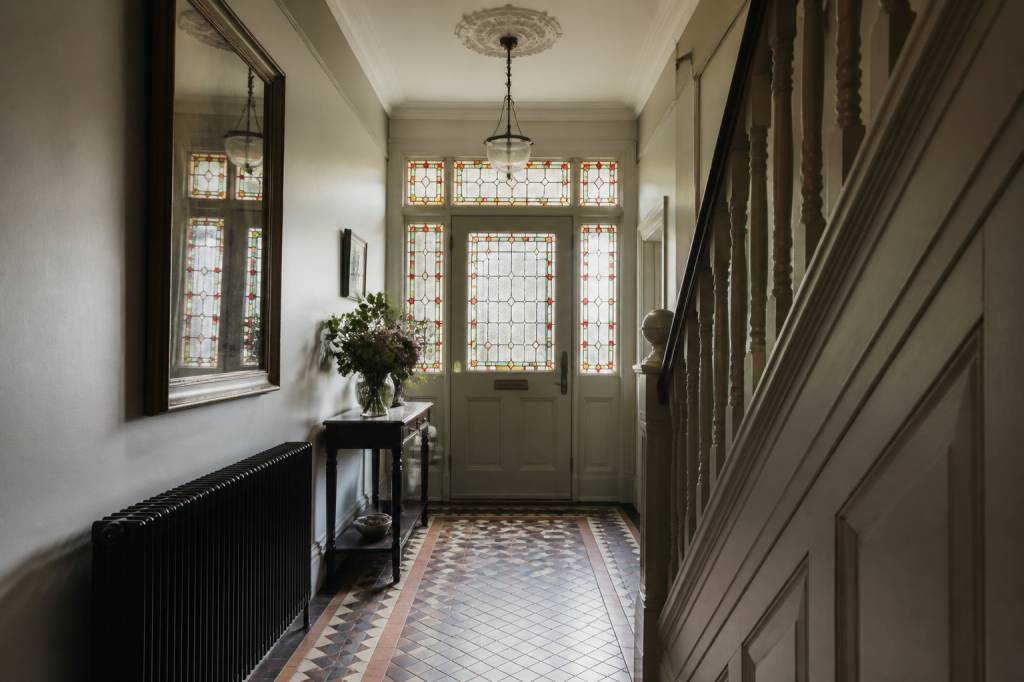
There is something quietly special about a 1930s hallway. It is not just a passage from one room to another; it is the first breath of the home, the small moment where a house introduces itself. In a well-loved 1930s property, the hallway often carries the first clues to the home’s character: the original banister worn smooth by hands, the patterned floor that still grounds the space, the soft curve of an archway, the modest but graceful proportions that seem to say, “This house has stories.”
And perhaps that is why hallways from this era continue to feel so appealing. They are practical, yes, but they also hold a certain elegance that never feels showy. When designed with care, a 1930s hallway can become the most welcoming room in the home: warm, functional, and full of personality. The secret is not to erase its history, but to work with it gently.
What makes a 1930s hallway so distinctive?
The 1930s were a decade of subtle transition in British home design. Houses from this period often sit between the decorative flourish of the Edwardian era and the clean simplicity that followed later in the century. That means many hallways from the 1930s have a lovely balance of structure and softness.
You may find features such as:
These details matter because they shape the feeling of the house before you have added a single cushion, rug, or lamp. A hallway like this doesn’t need to be over-decorated. It needs to be understood.
Start by keeping the bones of the space visible
If you are lucky enough to have original features, resist the urge to cover them all up in the name of a “fresh start.” A hallway from the 1930s often gains its charm from its honest materials and proportions. Sanding and staining a worn banister, restoring a tiled floor, or repainting panelling in a softer shade can do more for the room than any dramatic makeover.
Think of the hallway as the opening sentence of your home. It should feel edited, not crowded. That means preserving what feels authentic and letting each element breathe.
A good rule of thumb: before buying anything new, ask what the hallway already offers. Is there texture in the floor? Pattern in the glass? Shape in the arch? If the answer is yes, you already have a strong design foundation.
Choose colour with the light in mind
Colour in a 1930s hallway should flatter the architecture, not fight it. Many hallways in period homes are narrow or slightly dim, especially if the front door has original glazing and daylight arrives in a shy little trickle. This is where colour becomes both practical and emotional. The right shade can make the space feel airy, calm, and quietly confident.
Soft neutrals work beautifully, but not all neutrals are equal. A flat white can feel harsh in a hallway with little natural light, while a warmer white, pale stone, mushroom, or chalky beige can create a more enveloping mood. If you prefer colour, earthy greens, muted blues, and clay tones can feel especially at home in a 1930s interior. They echo the era without becoming costume drama.
For a more layered effect, consider using colour to highlight the architecture:
The best hallway colours are the ones that make you exhale when you walk through the door. That is the real test.
Make the floor do some of the talking
In many 1930s homes, the floor is one of the most memorable original features. Those beautiful geometric tiles, with their crisp edges and old-fashioned charm, were designed to cope with muddy shoes, wet umbrellas, and everyday life. In other words, they were made for real homes, not just photographs.
If the original floor is still intact, restoring it can be one of the most rewarding things you do. A well-cleaned tiled hallway with a simple runner can feel both elegant and lived-in. If the tiles are damaged or missing, there are plenty of respectful ways to recreate the spirit of the era without forcing a replica that feels too polished.
Options that suit a 1930s hallway include:
A hallway floor should be beautiful, yes, but also resilient. This is a threshold space, after all. It sees boots, school bags, parcels, pet paws, and the occasional rushed step when someone is late and pretending they are not.
Let lighting create atmosphere, not just visibility
Hallways are often treated like utility spaces, which is a shame, because lighting can completely change how they feel. In a 1930s home, the right lighting should honour the architecture and create a sense of calm from the moment you come through the door.
Layered lighting works best. Instead of relying on one bright ceiling light, think about combining different sources so the hallway feels welcoming at all times of day.
If your hallway has a low ceiling, choose fittings that sit close to the surface and avoid anything too bulky. If the space is taller or wider, a pendant with frosted glass or an opal globe can bring a lovely softness. The aim is not drama for its own sake. It is a gentle glow, the kind that makes a hallway feel like it is holding the rest of the home together.
Storage should feel calm, not apologetic
Hallways are hardworking spaces. They have to catch coats, shoes, scarves, post, keys, dog leads, and all the tiny bits of life that seem to multiply just after you have tidied. In a 1930s hallway, storage needs to be thoughtful so the room doesn’t lose its grace.
Built-in solutions are often the most successful because they can be tailored to the shape of the space. A shallow cupboard under the stairs, a bench with hidden storage, or a fitted coat cabinet can keep the room orderly without turning it into a utility closet.
If built-ins are not possible, choose freestanding pieces that feel visually light. A narrow console, a simple wall hook rail, or a vintage chest can do the job beautifully if edited with care.
Try to avoid filling every inch. A hallway feels more inviting when it has a bit of breathing space. Even practical storage can be beautiful when it is restrained.
Use mirrors with purpose
Mirrors are one of the oldest tricks in the book, but there is a reason they continue to work. In a 1930s hallway, a mirror can bounce light, create a sense of space, and add a decorative note without introducing clutter.
Look for a shape that suits the architecture. Arched mirrors soften angular spaces, while round mirrors can echo the curves often found in 1930s doorways and staircases. A rectangular mirror with a slim wooden or metal frame can feel clean and understated.
Position the mirror carefully. Placed opposite a source of natural light, it can amplify brightness. Hung above a console, it creates a classic hallway vignette. The mirror should feel intentional, not like a last-minute rescue mission.
Add character through furniture and small details
The joy of a hallway lies in the little things. This is not the place for overthinking every object, but it is the place where a few well-chosen pieces can make the whole house feel more personal.
A slender console table can hold a lamp, a small vase, and a bowl for keys. A vintage chair can soften a corner and make the space feel less transient. A framed print or family photograph can introduce warmth without overwhelming the wall.
Accessories work best when they are grounded in practicality:
It’s worth remembering that a hallway does not need much. A few familiar objects, placed with care, can say more about a home than a room full of decoration ever could.
Celebrate original doors, glass, and hardware
In many 1930s hallways, the smallest details have the biggest emotional pull. The original front door, with its carved panels or glazed inserts, can instantly set the tone. Likewise, period handles, letterplates, and stair fittings can offer a sense of continuity that makes the whole house feel more grounded.
If these features are still present, preserve them where possible. Clean and restore before replacing. The slight imperfections of aged brass or painted wood are often part of the charm. They carry memory. They remind us that a home is not a showroom; it is a living place.
If replacements are needed, choose materials and finishes that feel sympathetic rather than overly sleek. Satin brass, aged bronze, black iron, and painted timber can all work well in a 1930s setting. Avoid anything that feels too glossy or overly contemporary unless you are deliberately creating contrast.
Bring in pattern with restraint
Pattern can be wonderful in a 1930s hallway, but it works best when handled with a light touch. Because many homes from this era already have strong architectural features, you do not need to compete with them. Instead, choose one or two patterns that complement the structure.
This might mean a geometric tiled floor paired with plain walls, or a subtle wallpaper on one section of the hallway while the rest stays calm. If you are using wallpaper, look for designs inspired by nature, soft geometry, or period motifs. Too much visual noise can make a hallway feel busy before you have even taken off your coat.
A little pattern can be enough to create rhythm and charm. Think of it as a whisper rather than a shout.
Keep the hallway connected to the rest of the home
A timeless hallway does not exist in isolation. It should feel like the opening note of the home’s larger story. The materials, colours, and finishes you choose in the hallway can gently echo what happens in the rooms beyond it.
For example, if your living room has warm wood tones, bring a hint of that into the hallway through the staircase, a mirror frame, or the runner. If the kitchen is painted in a soft green, consider a related shade for the hallway so the transition feels smooth. This doesn’t mean everything must match. In fact, that can feel a little too eager. But there should be a sense of conversation between the spaces.
When a hallway feels connected to the rest of the house, the whole home begins to feel more considered. More coherent. More like it belongs to one family, one rhythm, one way of life.
Think about how the hallway feels to live with every day
Above all, a 1930s hallway should support daily life beautifully. It should be easy to clean, simple to move through, and welcoming whether you are coming home with bags of groceries or stepping out in a hurry on a wet Tuesday morning. The best design choices are often the ones that make ordinary moments gentler.
Ask yourself a few practical questions before making changes:
These questions matter because a hallway is experienced many times a day. It should not merely look lovely for visitors. It should feel like it belongs to you.
And perhaps that is the quiet magic of a well-designed 1930s hallway. It is not about recreating the past perfectly, nor about stripping it away in the name of modernity. It is about listening to the house, noticing what it already knows, and adding just enough to help it speak clearly.
When done well, the hallway becomes more than a corridor. It becomes a place of arrival, departure, pause, and comfort. A place where your home welcomes you back in the most honest way possible.