
Why Multi-Functional Home Offices Are the New Essential
The hybrid work lifestyle has transformed how we live at home. The days of a spare laptop on the dining table are fading. In their place, a dedicated, multi-functional home office is becoming a key feature of contemporary interiors. It’s no longer just about a desk and a chair. Today’s home office must support focused work, creative thinking, video calls and, often, other everyday activities such as hobbies, guest accommodation or family life.
Designing a multi-purpose workspace means balancing function, comfort and style. The challenge is to create an office that feels professional during working hours and harmoniously blends back into the home once the laptop is closed. Thoughtful interior design, smart storage and flexible furniture are at the heart of this new approach.
Defining the Purpose of Your Hybrid Home Office
Before choosing furniture or paint colours, clarify how your home office needs to perform. A multi-functional space should respond to your real habits, not to an idealised image of work.
Ask yourself:
- Will the room double as a guest bedroom, hobby space or reading nook?
- Do you share the space with a partner or children on certain days?
- How often do you attend video meetings or client calls?
- Do you need space for physical documents, samples or equipment?
- Should the office be easily “hidden” outside working hours?
Listing these requirements helps you choose the right layout and furniture. For example, a hybrid home office that sometimes acts as a guest room will rely on a sofa bed or a fold-down wall bed. A workspace that shares a living area may need visually light pieces and compact, closed storage to keep the room calm in the evening.
Choosing the Right Location in the Home
Location is one of the most powerful design decisions. In a hybrid work lifestyle, you might only need deep focus a few days per week. On the others, you simply want a comfortable, integrated spot for emails or planning.
Common options include:
- Spare bedroom: Ideal for a quiet, enclosed office that can also host guests occasionally. It allows more built-in storage and a proper ergonomic setup.
- Living room corner: Suitable for small apartments where floor space is limited. A wall-mounted desk or compact workstation can blend into the decor.
- Under-stairs zone or corridor niche: Often underused, these areas can host a streamlined desk with vertical storage and task lighting.
- Attic or loft: Perfect for a more secluded, studio-style home office, especially if natural light is abundant.
- Bedroom workspace: Works for occasional tasks, but careful zoning and visual separation are vital to maintain restfulness.
For hybrid working, acoustic comfort is crucial. If your home is busy during the day, prioritise rooms with doors and fewer shared walls. Rugs, curtains and upholstered seating also help absorb sound and make video calls more professional.
Planning a Flexible Layout
A multi-functional home office benefits from clear “zones” within a single room. These zones don’t need walls; they can be defined by furniture placement, rugs, lighting or colour changes.
Consider integrating:
- Focused work zone: A primary desk area with ergonomic seating, correct screen height and access to good light.
- Collaborative or creative zone: A small table, armchair or bench for brainstorming, reading or informal laptop work.
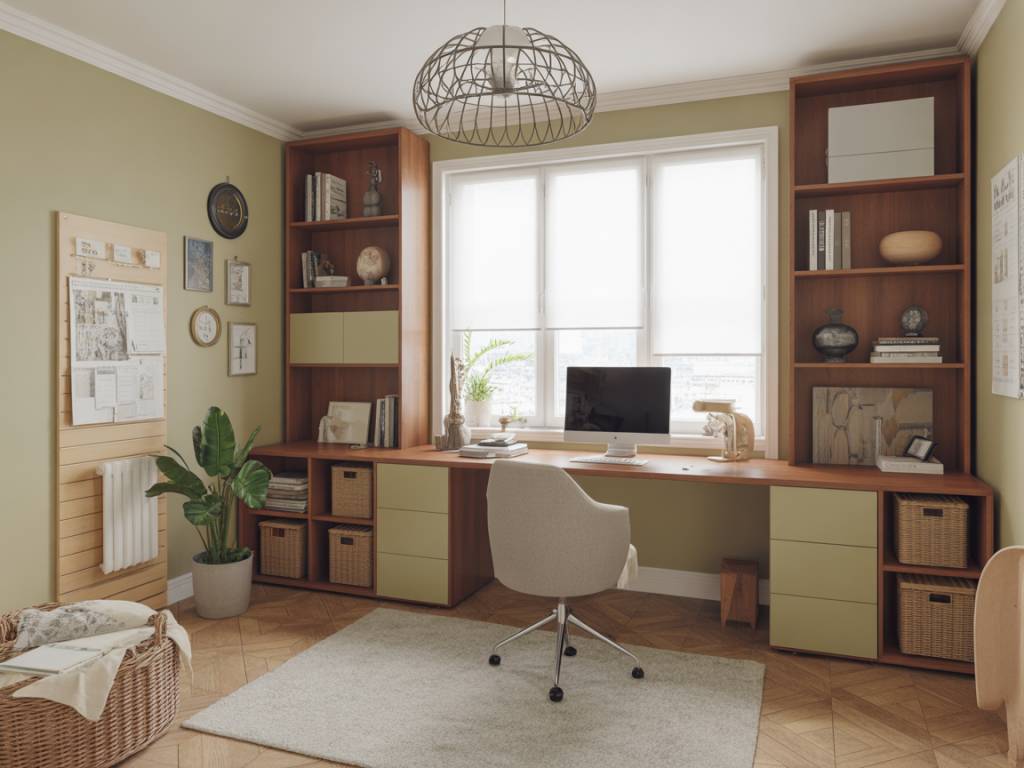
- Storage wall: A run of cabinets, shelves or a modular system that organises office supplies and personal items.
- Flexible “off-duty” zone: A daybed, sofa or yoga mat area that reclaims the room after working hours.
When planning the layout, think in layers. Large furniture defines movement and circulation. Smaller pieces, such as side tables or stools, provide adaptability. The goal is to shift the energy of the room quickly from “office mode” to “home mode” with a few simple actions, like closing a cabinet or sliding a screen.
Smart Furniture for a Multi-Functional Space
Multi-functional home office furniture is essential for a stylish, flexible interior. The right pieces work hard without dominating the room, especially in hybrid spaces that share functions.
Practical options include:
- Fold-out or wall-mounted desks: These create a compact workstation that folds away when not in use, ideal for living rooms or small bedrooms.
- Height-adjustable desks: A sit-stand desk supports long-term comfort and can double as a console or sideboard when accessorised thoughtfully.
- Sofa beds and daybeds: Perfect for home offices that double as guest rooms. Choose designs with clean lines so they read as a lounge piece, not just a bed.
- Nesting tables and mobile carts: Lightweight, movable surfaces that can be pulled into service during busy work days and tucked away afterwards.
- Storage ottomans and benches: They hide tech accessories or files while offering extra seating for visitors or family members.
Look for furniture with integrated cable management and hidden compartments. Clean silhouettes and quality materials ensure your home office feels like an intentional part of your interior design, not an afterthought.
Optimising Storage and Organisation
Storage is where many hybrid home offices succeed or fail. Clutter can quickly overwhelm a shared room and make the workday feel chaotic. An organised system allows you to transition smoothly between work and personal time.
Effective strategies include:
- Vertical storage solutions: Tall shelving units, pegboards and wall rails keep surfaces clear while maximising limited floor space.
- Closed cabinets and drawers: Essential in living areas, they hide paperwork, printers and office accessories from view.
- Modular systems: Adjustable shelves, boxes and baskets that can evolve with your work needs and changing lifestyle.
- Dedicated tech station: A specific drawer or box for chargers, cables and peripherals prevents visual and practical clutter.
Try to assign each category of item a clear “home”. Labeled boxes, file folders and cable ties may seem basic, but they transform daily efficiency. At the end of the day, a quick five-minute reset restores order and visually “closes” the office.
Lighting Design for Focus and Atmosphere
Lighting is a powerful tool in a multi-functional home office. It shapes mood, supports focus and helps change the room’s character from daytime workspace to evening retreat.
Think in three layers:
- Ambient lighting: General room light from ceiling fixtures or wall sconces, ideally dimmable to adapt to different activities.
- Task lighting: Adjustable desk lamps or articulated wall lights placed to avoid screen glare and shadows on paperwork.
- Accent lighting: Floor lamps, LED strips on shelves or picture lights that add warmth and highlight decorative elements.
Whenever possible, position your desk perpendicular to a window. This reduces glare on screens and offers a comfortable, even wash of daylight. For video calls, front-facing light is flattering and professional. A combination of a soft desk lamp and natural light, rather than a bright overhead source, tends to create the best on-camera effect.
Colour Palettes and Materials for a Stylish Hybrid Space
In a hybrid work environment, your office is part workplace, part sanctuary. Colour and materials help balance these roles. A well-chosen palette can calm the mind, increase focus and keep the room visually coherent with the rest of your home.
Popular approaches include:
- Soft neutrals with texture: Warm whites, greiges and taupes paired with wood, linen and wool for a timeless, soothing backdrop.
- Muted accent tones: Sage green, dusty blue or terracotta bring gentle character without feeling overwhelming on long workdays.
- Monochrome schemes: Different shades of one colour create a refined, architectural feel that works well in contemporary interiors.
Materials matter as much as colour. Natural wood desks, woven baskets and tactile rugs counterbalance the coldness of tech devices. They also tie the home office visually to living areas, supporting a cohesive interior style.
Designing for Video Calls and Online Presence
For many professionals, the home office doubles as a broadcasting studio. Whether you are joining weekly team meetings or hosting webinars, your background and audio quality shape how others experience you.
Focus on three elements:
- Background composition: A simple, tidy backdrop with a bookshelf, artwork or plants looks calm and intentional. Avoid overly busy or personal displays.
- Lighting for the camera: As mentioned, soft, frontal light is more flattering than strong overhead downlights. Consider a small, adjustable ring light if your workspace lacks natural daylight.
- Acoustic comfort: Add rugs, curtains, fabric panels or even filled bookcases to reduce echo. These touches improve both sound quality and visual warmth.
Visual consistency also matters. If possible, align your on-screen background with your professional brand: restrained colours, neat styling and a few characterful details such as a ceramic vase or framed print.
Integrating Well-Being into the Hybrid Home Office
A multi-functional office should support not only productivity but also well-being. With more time spent at home, small design decisions can dramatically influence posture, energy and mood.
Helpful features include:
- Ergonomic seating: An adjustable chair with lumbar support protects your back during longer work sessions.
- Greenery: Indoor plants soften the space and improve perceived air quality. Low-maintenance species like pothos or snake plants are ideal.
- Movement opportunities: A standing desk option, a small stretch area or a balance board encourages micro-breaks throughout the day.
- Personal rituals: A tray with a carafe, favourite mug and candle, or a small speaker for background music, helps transition into and out of work mode.
These touches transform the home office from a purely functional zone into a supportive environment that respects both your professional and personal life.
Creating a Space That Adapts Over Time
The hybrid work lifestyle will continue to evolve, and your multi-functional home office should be flexible enough to follow. Selecting modular furniture, timeless finishes and movable accessories ensures that you can reconfigure the space as your career, family or hobbies change.
Instead of a rigid, single-purpose room, think of your home office as a responsive interior landscape. One that shifts from focused desk work to relaxed reading, from quiet solo tasks to collaborative calls, and from weekday productivity to weekend leisure with minimal effort. When style, comfort and function are aligned in this way, the home becomes a true ally in modern hybrid living.