


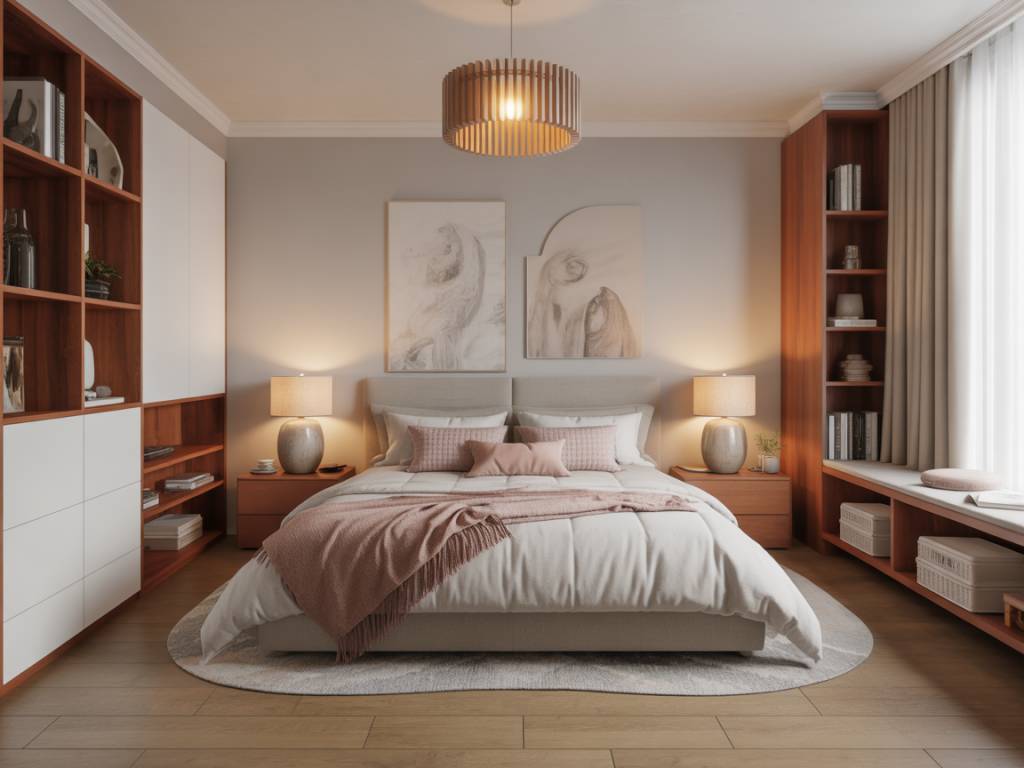
Start with the Purpose of the Room
A sleep-enhancing bedroom begins with a clear purpose. This room should support rest, recovery, and calm. It is not simply another decorated space in the home. It is a private environment designed to help the body and mind slow down.
That means every design choice should be filtered through one question: does this element make sleep easier or harder? A restful sanctuary at home is created when the bedroom feels quiet, balanced, and visually uncomplicated. The best bedroom design does not draw attention to itself. It supports the experience of rest.
Many people treat the bedroom as storage, an office, a dressing area, and a sleeping space all at once. This creates visual noise. It also makes it harder for the brain to associate the room with relaxation. If you want a sleep-friendly bedroom, keep the function focused and intentional.
Choose a Calming Color Palette
Color has a direct impact on the feeling of a room. In a bedroom, soft and muted shades are often the most effective. Think warm whites, pale beige, taupe, dusty blue, sage green, soft grey, and desaturated earth tones. These tones create a gentle atmosphere without overstimulating the senses.
A calming color palette works best when it is used consistently across walls, bedding, curtains, and accessories. Strong contrast can feel energetic, while a layered neutral scheme tends to feel more restful. That does not mean the room must be colorless. It means the colors should be harmonious and easy on the eye.
Darker colors can also work well in a sleep-enhancing bedroom when they are used thoughtfully. Deep charcoal, navy, or forest green can add depth and coziness, especially in larger rooms. The key is to balance richness with softness through texture, lighting, and natural materials.
Control Light for Better Sleep
Light management is one of the most important aspects of bedroom design for sleep. Bright light in the evening can interfere with the body’s natural wind-down process. Morning light, on the other hand, can help regulate the sleep-wake cycle. The goal is to reduce disruptive light at night and manage natural light during the day.
Blackout curtains are a practical solution for many bedrooms. They help block streetlights, early sunrise, and other external sources of light. If you prefer a softer look, layered window treatments can combine sheer curtains with heavier drapes. This gives you control over brightness while preserving a decorative feel.
Lighting fixtures should also be chosen carefully. Avoid harsh overhead lighting in the evening. Instead, use bedside lamps, wall sconces, or dimmable fixtures that create a softer glow. Warm white bulbs generally feel more relaxing than cool white light. A bedroom should transition gently from day to night.
- Use blackout curtains or lined drapes to reduce unwanted light
- Choose dimmable lamps for flexible evening lighting
- Prefer warm light over harsh blue-toned bulbs
- Limit bright screens and reflective surfaces near the bed
Prioritize Comfort in the Bed Itself
The bed is the centerpiece of a restful sanctuary. It should feel inviting, supportive, and comfortable from the moment you enter the room. A mattress that suits your sleep position is essential. So is a pillow setup that supports the neck and spine properly. Comfort is not a luxury here. It is a design requirement.
Bedding plays a major role in the quality of sleep and the visual mood of the room. Natural fabrics such as cotton, linen, and bamboo are often preferred for their breathability and softness. Layering matters too. A fitted sheet, flat sheet, lightweight duvet, and an extra throw allow you to adjust to changing temperatures throughout the night.
The bed should look calm, not overstuffed. Too many decorative pillows can become impractical and visually busy. A streamlined arrangement often feels more restful. Keep the bedding clean, crisp, and tactile. The bedroom should invite the body to settle down.
Use Texture to Add Warmth Without Clutter
Texture creates depth in a sleep-enhancing bedroom without relying on bold patterns or excessive decoration. This is one of the most effective ways to make a room feel layered and comforting. Soft wool throws, woven cushions, upholstered headboards, natural fiber rugs, and linen curtains all contribute to a more relaxed environment.
When textures are mixed well, the bedroom feels richer and more finished. A smooth cotton duvet can sit beside a nubby throw. A wooden nightstand can complement a woven basket. A plush rug can soften a hard floor and make the room quieter underfoot. These subtle contrasts create interest without visual stress.
Texture is especially valuable in minimalist bedrooms. A space with few objects still needs warmth. Without it, the room can feel cold or unfinished. The right materials bring balance. They make a simple bedroom feel human and lived in.
Keep the Layout Simple and Functional
The layout of the bedroom should support movement and ease. A cluttered layout can feel stressful, even if the room is beautifully decorated. The bed should be positioned in a way that feels secure and visually balanced. In many rooms, this means placing it against the main wall with clear space on both sides if possible.
Nightstands should be practical and proportionate to the bed. They need only enough surface area for a lamp, a book, a glass of water, or a few essential items. Oversized furniture can make the room feel crowded. Too many pieces can interrupt the sense of calm.
If the room is small, editing becomes even more important. Choose furniture with storage built in, such as ottomans, beds with drawers, or slim wardrobes. A sleep-friendly bedroom should not feel squeezed. It should feel open enough for the eye and body to relax.
- Place the bed so it feels visually anchored
- Leave clear circulation space around furniture
- Use compact storage to reduce visible clutter
- Avoid placing unnecessary furniture in the room
Reduce Visual Clutter and Everyday Distractions
Clutter is one of the fastest ways to interrupt the feeling of rest in a bedroom. Visible items can keep the brain alert, even if the room is otherwise attractive. Clothing, cords, paperwork, and random objects all add to a sense of unfinished energy. A restful sanctuary depends on order.
Storage should be discreet and easy to use. Closed wardrobes, under-bed storage, drawers, and baskets can help contain everyday items. The aim is not perfection. It is visual quiet. When surfaces are clear, the room feels more spacious and more calming.
Technology is another important factor. Televisions, bright chargers, and blinking devices can reduce the soothing quality of the room. If you use electronics in the bedroom, keep them as unobtrusive as possible. Hidden cables and minimal screen exposure support a better sleep environment.
Bring in Natural Materials and Gentle Accents
Natural materials are closely associated with comfort and serenity. Wood, stone, linen, cotton, wool, and rattan all add an organic quality to bedroom decor. These materials often feel more grounded than glossy or synthetic finishes. They help create a space that feels connected to nature, which can be deeply soothing.
Accent choices should remain restrained. A few framed prints, a ceramic lamp, a simple vase, or a bedside plant may be enough. Too many decorative accessories can interrupt the peaceful tone. In a sleep-enhancing bedroom, every accent should feel intentional.
Plants can be especially effective if they are used sparingly. A low-maintenance indoor plant can soften the room and bring a fresh visual element. Just avoid overfilling the space with greenery. The effect should be light and natural, not crowded or decorative for its own sake.
Pay Attention to Temperature and Air Quality
Comfort is not only visual. It is also physical. A bedroom that is too warm, too cold, stuffy, or dry can disrupt sleep. Temperature control is an important part of bedroom design, even if it is less visible than paint color or furniture style. A restful sanctuary should feel fresh and breathable.
Where possible, allow for ventilation and air circulation. Open windows, quiet fans, or adjustable heating can help maintain a comfortable environment. Breathable bedding also matters. Materials that wick moisture and regulate heat can improve sleep quality through the night.
If you are designing a bedroom from scratch, consider how the room handles daylight and airflow. Window placement, insulation, and even curtain weight all influence comfort. A beautiful bedroom still needs to function well. Sleep depends on more than appearance.
Create a Nighttime Routine Within the Space
A sleep-enhancing bedroom becomes more effective when it supports a nightly routine. The environment should make it easy to slow down. That might mean keeping a book on the nightstand, using a bedside lamp instead of overhead light, or placing a carafe of water within reach.
Small rituals can reinforce the bedroom’s role as a place of rest. Folding blankets neatly, dimming the lights, and clearing surfaces before bed all help signal that the day is ending. The room can shape behavior. Over time, it becomes associated with calm.
Design is not only about style. It is about habit. The most restful bedrooms are often the ones that encourage consistency. They make it easier to sleep well because they remove friction from the evening routine.
Balance Style and Sleep Function
A restful bedroom does not need to be plain. It can still reflect personal taste. The important point is balance. Decorative choices should support the atmosphere of calm rather than compete with it. Whether the style is modern, traditional, Scandinavian, rustic, or contemporary, the bedroom should remain cohesive and restful.
Think of the room as a retreat rather than a display space. Soft layering, thoughtful lighting, and carefully edited decor can produce a polished result without overwhelming the senses. The most successful sleep-enhancing bedroom design feels effortless, even though it is often carefully planned.
When all the elements work together, the bedroom becomes more than a place to sleep. It becomes a restorative interior, one that encourages quiet, comfort, and daily renewal.